
Currently Empty: ₹0.00


Many households today are switching from powder to liquid laundry products, but one common question remains: how much liquid detergent should you actually use in a washing machine?
Using too much detergent is one of the most common laundry mistakes. Excess detergent can leave residue on clothes, cause unpleasant odors in washing machines, and waste money on every wash.
In most cases, the correct amount ranges between 30 ml and 60 ml per wash, depending on load size, water hardness, and detergent concentration.
In this guide, you will learn:
- The correct detergent dosage for different load sizes
- The difference between front load and top load detergent quantity
- How water hardness affects detergent usage
- Signs you are using too much detergent
- How to choose the right liquid laundry detergent
This complete guide will help you get cleaner clothes, longer washing machine life, and better laundry efficiency.
If you are looking for a concentrated laundry solution suitable for both front load and top load machines, you can explore FragliteLiquid Detergent, a modern washing machine detergent designed for efficient cleaning and controlled foam
📌 Jump to Sections
Quickly navigate to any section:
- How Much Liquid Detergent to Use (Quick Answer)
- Liquid Detergent Dosage Guide
- Problems of Using Too Much Detergent
- Liquid vs Powder Detergent Comparison
- Front Load Detergent Dosage
- Top Load Detergent Dosage
- Water Hardness & Detergent Usage
- Common Laundry Mistakes
- Laundry Problems & Solutions
- Cost Per Wash Comparison
- Ultimate Detergent Comparison
- Frequently Asked Questions
✅ Quick Answer: How Much Liquid Detergent Should You Use?
Most washing machines require 30–60 ml of liquid detergent per wash.
- Front load machines: 30–40 ml
- Top load machines: 40–60 ml
- Hard water: add 10–20 ml extra
Using the correct amount improves cleaning, prevents residue, and extends fabric life.
Why Using Too Much Liquid Detergent Is a Problem
The image below shows the common problems caused by using too much liquid detergent in a washing machine, including foam buildup, residue on clothes, and poor rinsing performance.
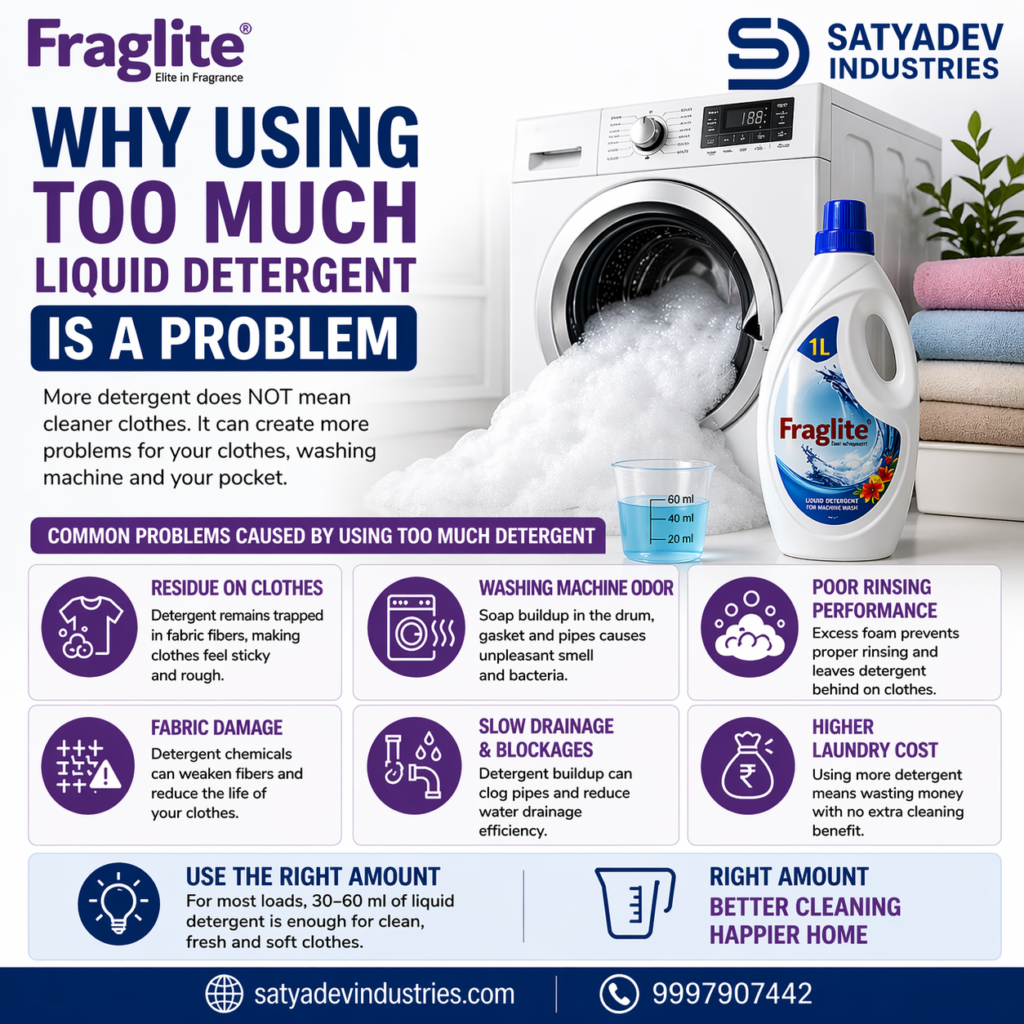
Many people believe that adding more detergent results in cleaner clothes. In reality, the opposite is often true.
When excess detergent is used, washing machines struggle to rinse away all the foam and chemical residue. This can lead to several problems.
Common Problems Caused by Too Much Detergent
| Problem | What Happens |
|---|---|
| Residue on clothes | Detergent remains trapped in fabric fibers |
| Washing machine odor | Soap buildup causes bacteria and smell |
| Poor rinsing | Excess foam prevents proper rinsing |
| Fabric damage | Chemicals weaken textile fibers |
| Higher laundry cost | You waste detergent every wash |
Using excessive detergent does not improve cleaning performance. Instead, it creates washing machine maintenance issues and increases laundry costs. Correct dosage ensures better washing results and fabric care
Mistake Most People Make
Most households use 2× more detergent than required, which reduces cleaning efficiency instead of improving it.
5 Signs You Are Using Too Much Detergent
- Clothes feel sticky after washing
- Excess foam appears during rinse cycles
- Washing machine develops unpleasant odors
- Clothes appear dull or stiff
- Washing machine drains slowly
These signs indicate detergent buildup, which can reduce washing efficiency and damage fabrics over time.
Liquid Detergent vs Powder Detergent
Many households still use powder detergents, but liquid detergents offer several advantages.
Liquid Detergent vs Powder Detergent for Washing Machines
| Feature | Liquid Detergent | Powder Detergent |
|---|---|---|
| Dissolves in water | Dissolves quickly even in cold water | May leave particles in short wash cycles |
| Stain pretreatment | Can be applied directly on stains | Usually needs to be dissolved first |
| Residue on clothes | Lower risk of residue | Higher chance of residue in hard water |
| Washing machine compatibility | Ideal for front load and top load machines | Works better in traditional washing methods |
| Foam control | Controlled foam suitable for modern machines | Can sometimes create excessive foam |
Liquid detergents generally perform better in modern washing machines because they dissolve faster, distribute evenly in water, and reduce the chances of residue on fabrics. Powder detergents can still work well, but liquid formulations are often preferred for convenience and machine compatibility.
How much liquid detergent – Correct Liquid Detergent Quantity Per Load
The image below shows the correct liquid detergent quantity per load based on clothes weight and washing machine capacity, helping you avoid detergent overuse and improve cleaning efficiency.

The right detergent quantity depends mainly on load size and concentration of the detergent.
Standard Liquid Detergent Dosage Guide
| Load Size | Clothes Weight | Recommended Detergent |
|---|---|---|
| Small load | 3–4 kg | 20–25 ml |
| Medium load | 5–6 kg | 30–40 ml |
| Large load | 7–8 kg | 50–60 ml |
| Heavy load | 9 kg+ | 60–75 ml |
Laundry detergent dosage increases with load size. However, even for large loads, excessive detergent is unnecessary because modern liquid detergents are highly concentrated.
Liquid Detergent Dosage for Front Load Washing Machines
The image below shows the correct liquid detergent dosage for front load washing machines. Since these machines use less water, they require smaller detergent quantities to prevent foam buildup and ensure efficient rinsing.
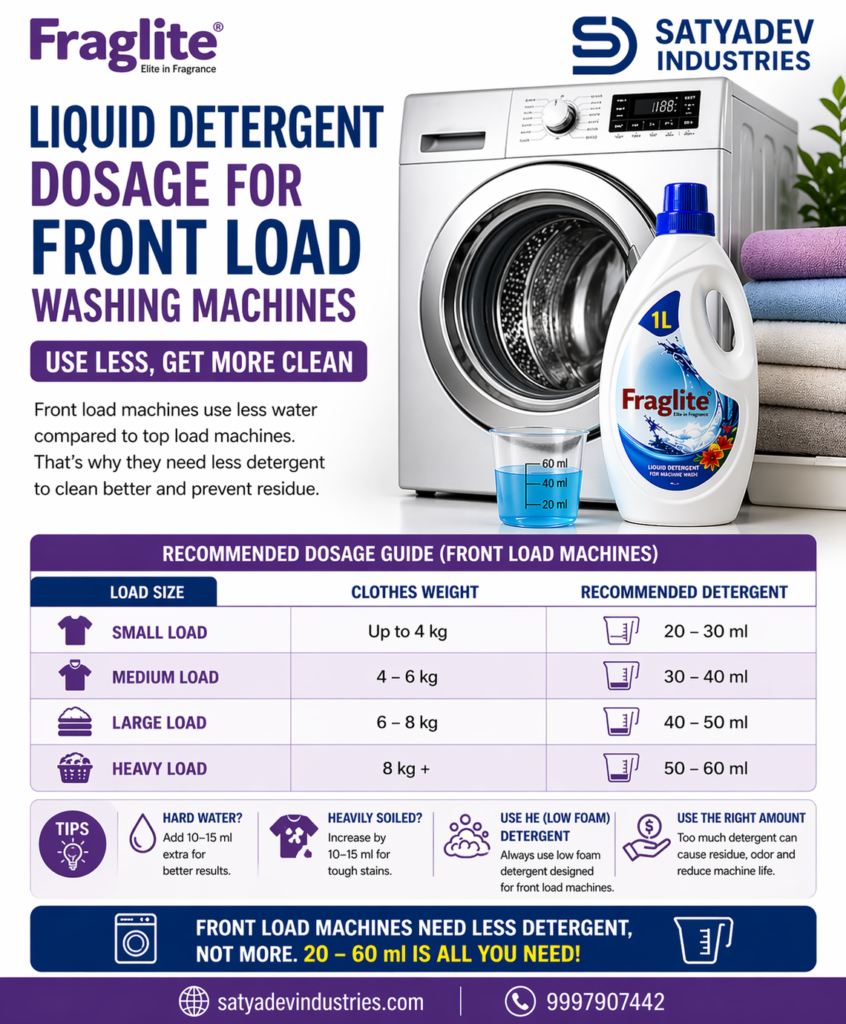
Front load washing machines use less water and require low foam detergent formulations. Because of this design, they need smaller detergent quantities.
Recommended Detergent for Front Load Machines
| Load Type | Detergent Amount |
|---|---|
| Light load | 20 ml |
| Normal load | 30 ml |
| Heavy load | 40–50 ml |
| Hard water wash | 50–60 ml |
Conclusion from this table:
Front load machines are designed for efficiency, so they require less detergent than top load machines. Using excess detergent in front load machines can cause foam buildup and poor rinsing.
Liquid Detergent Dosage for Top Load Washing Machines
The image below shows the correct liquid detergent dosage for top load washing machines. Since these machines use more water, they require slightly higher detergent quantities for effective cleaning and stain removal
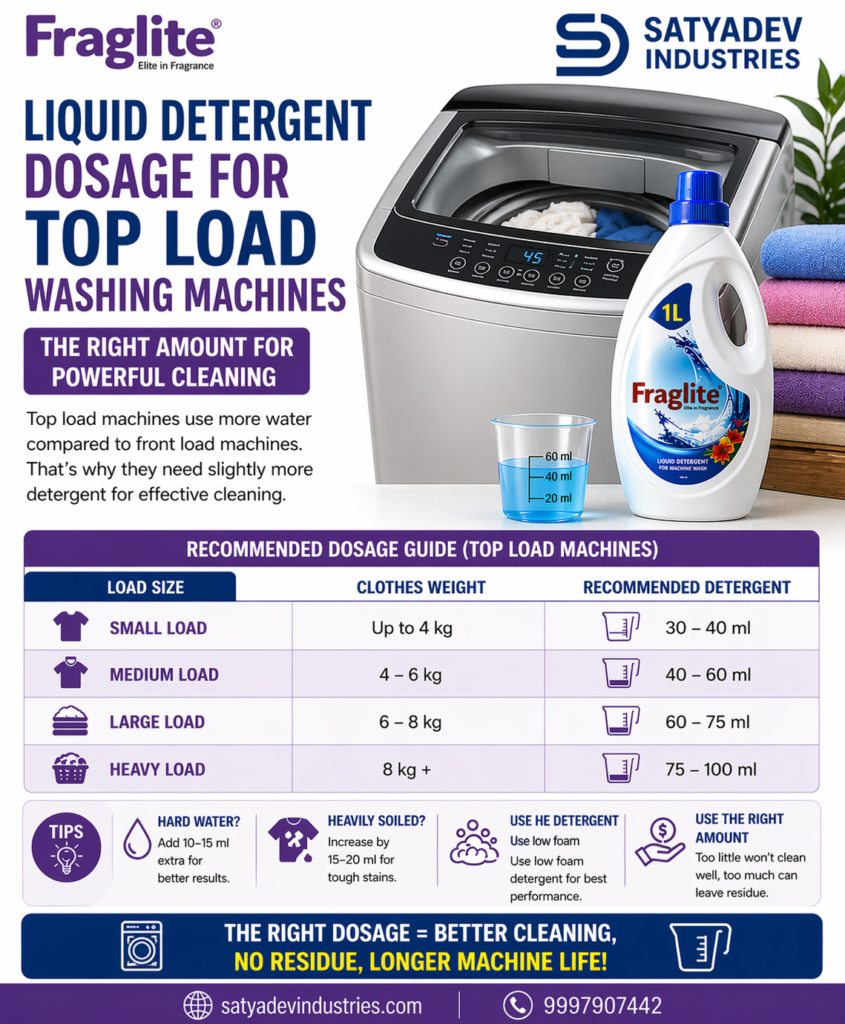
Top load washing machines use more water during washing cycles. This means they can tolerate slightly higher detergent quantities.
Recommended Detergent for Top Load Machines
| Load Type | how much liquid Detergent Quantity |
|---|---|
| Small load | 25 ml |
| Medium load | 35–40 ml |
| Large load | 50 ml |
| Extra dirty clothes | 60 ml |
Top load washing machines require slightly more detergent because of higher water usage. However, the difference between front load and top load detergent dosage is usually small.
How Water Hardness Affects Detergent Usage
Water quality plays a significant role in laundry performance. In many parts of India, hard water contains minerals like calcium and magnesium that reduce detergent effectiveness.
Detergent Usage Based on Water Hardness
| Water Type | Mineral Level | Recommended Detergent |
|---|---|---|
| Soft water | Low minerals | 20–30 ml |
| Moderately hard water | Medium minerals | 40 ml |
| Hard water | High minerals | 50–60 ml |
Conclusion from this table:
Hard water reduces the cleaning power of detergents. Increasing detergent slightly in hard water conditions helps achieve better stain removal.
Laundry Efficiency Statistics Block
Interesting Laundry Facts About Detergent Usage
| Laundry Insight | Explanation |
|---|---|
| Many households use too much detergent | Excess detergent can reduce rinsing efficiency |
| Concentrated detergents require smaller quantities | Modern formulas clean effectively with less product |
| Hard water affects detergent performance | Minerals reduce cleaning efficiency |
| Correct dosage improves fabric life | Proper detergent use reduces chemical buildup |
Laundry performance depends not only on the detergent type but also on correct dosage and water conditions. Using the recommended amount of liquid detergent helps improve washing efficiency, reduces waste, and protects both fabrics and washing machines.
Signs You Are Using Too Much Detergent
Many laundry issues occur simply because detergent dosage is too highand people dont know how much liquid detergent to use .
Common Signs of Excess Detergent
| Symptom | Explanation |
|---|---|
| Clothes feel sticky | Residue remains in fabric |
| Excessive foam | Machine cannot rinse completely |
| Washing machine smells | Soap buildup encourages bacteria |
| Clothes appear dull | Detergent residue attracts dirt |
If these problems occur regularly, reducing detergent quantity can significantly improve laundry results.
Choosing the Right Liquid Laundry Detergent
Not all liquid detergents are formulated the same way. The effectiveness of detergent depends on several factors.
Factors to Consider When Selecting Liquid Detergent
| Factor | Why It Matters |
|---|---|
| Concentration | Higher concentration requires smaller dosage |
| Foam control | Low foam detergents work best in washing machines |
| Stain removal agents | Improve cleaning performance |
| Fabric safety | Protects colors and delicate fabrics |
| Compatibility | Suitable for front load and top load machines |
Selecting a concentrated, low-foam liquid detergent ensures efficient cleaning while reducing detergent consumption.
Choosing a high-quality detergent is essential for effective laundry care. Products like high-quality concentrated liquid detergent by Satyadev Industries are formulated with balanced cleaning agents that help remove stains while maintaining fabric softness.
You can explore the product here:
Common Laundry Mistakes That Reduce Cleaning Performance
Even with the correct detergent dosage, certain habits can affect laundry results.
Frequent Laundry Mistakes
| Mistake | Result |
|---|---|
| Overloading washing machine | Poor cleaning performance |
| Using too much detergent | Residue buildup |
| Ignoring water hardness | Reduced stain removal |
| Mixing heavy and delicate fabrics | Fabric damage |
Improving laundry habits and using the correct detergent quantity can significantly enhance washing results and extend the lifespan of clothes.
Quick Detergent Dosage Reference Chart for How Much Liquid Detergent to use
For convenience, here is a quick summary chart.
| Washing Machine Type | Small Load | Medium Load | Large Load |
|---|---|---|---|
| Front Load | 20 ml | 30 ml | 40–50 ml |
| Top Load | 25 ml | 35–40 ml | 50–60 ml |
Most households only need 30–50 ml of liquid detergent per wash. Using more detergent rarely improves cleaning performance.
This guide is based on practical usage insights from Satyadev Industries, a manufacturer of cleaning chemicals and laundry solutions used in commercial and household applications.
Where to Buy best Quality Liquid Detergent
When selecting a liquid laundry detergent, it is important to choose a product that is compatible with modern washing machines and provides effective stain removal.
If you are exploring reliable options, you can check Fraglite Liquid Detergent, which is designed for both residential and commercial laundry applications.
Laundry Myths vs Facts Table related to How Much Liquid Detergent to use
Myth-busting sections perform very well in Google snippets and search results.
Common Laundry Myths About Liquid Detergent
| Myth | Reality |
|---|---|
| More detergent cleans clothes better | Excess detergent can leave residue and reduce cleaning efficiency |
| Powder detergent always cleans better | Liquid detergents work effectively in modern washing machines |
| Detergent quantity does not matter | Correct dosage improves washing results and rinsing |
| All detergents work the same | Detergent formulas vary in concentration and cleaning power |
Many laundry habits are based on misconceptions. Understanding how detergents actually work helps households achieve better cleaning results while using the correct quantity of detergent.
Common Laundry Problems and Solutions related to How Much Liquid Detergent to use
Many washing problems are not caused by the washing machine itself but by incorrect detergent usage, poor washing habits, or unsuitable detergent types.
Below are some common laundry issues and practical solutions.
1. Clothes Still Look Dirty After Washing
| Possible Cause | Explanation |
|---|---|
| Insufficient detergent | Not enough detergent to break down oils and stains |
| Overloading the washing machine | Clothes do not move freely during washing |
| Incorrect wash cycle | Light wash cycles may not remove heavy dirt |
To improve cleaning performance, use the correct detergent quantity and avoid overloading the washing machine. Liquid detergents distribute evenly in water and help lift dirt from fabrics more effectively.
2. White Residue Appears on Clothes
| Possible Cause | Explanation |
|---|---|
| Too much detergent | Excess detergent leaves residue on fabrics |
| Hard water minerals | Minerals react with detergent and create deposits |
| Poor rinsing | Washing machine cannot rinse foam completely |
Residue problems often occur when detergent dosage is too high. Using the recommended amount of liquid detergent and ensuring proper rinse cycles helps prevent residue on clothes.
3. Washing Machine Develops Bad Odor
| Possible Cause | Explanation |
|---|---|
| Soap buildup inside drum | Detergent residue encourages bacteria growth |
| Moisture trapped in machine | Closed door keeps moisture inside |
| Infrequent cleaning | Washing machines require occasional maintenance |
Using the correct detergent quantity and leaving the washing machine door open after washing helps reduce moisture buildup and prevents unpleasant odors.
4. Clothes Feel Rough or Stiff After Washing
| Possible Cause | Explanation |
|---|---|
| Detergent buildup in fabric | Excess detergent hardens fabric fibers |
| Hard water minerals | Minerals affect fabric softness |
| Too little rinsing | Soap residue remains inside clothes |
Reducing detergent quantity and ensuring proper rinse cycles can help restore fabric softness and improve laundry results.
5. Excess Foam in Washing Machine
| Possible Cause | Explanation |
|---|---|
| Overusing detergent | Excess foam forms during wash cycle |
| Using wrong detergent type | Some detergents create high foam |
| Incorrect dosage for machine type | Front load machines require low foam detergent |
Front load machines require low foam liquid detergents and smaller quantities. Using the correct detergent amount ensures smooth washing cycles and efficient rinsing.
Choosing a high-quality detergent also plays an important role in solving common laundry problems. Concentrated formulations such as Fraglite Liquid Detergent from Satyadev Industries are designed to provide effective stain removal while maintaining controlled foam in washing machines.
💰 Liquid Detergent Cost Per Wash Comparison
Understanding detergent usage per wash can help households estimate the real cost of laundry. Concentrated liquid detergents often require smaller quantities, which can reduce the cost per wash.
| Detergent Type | Average Quantity Per Wash | Estimated Cost Per Wash |
|---|---|---|
| Concentrated liquid detergent | 30–40 ml | Lower cost per wash |
| Standard liquid detergent | 50–60 ml | Moderate cost per wash |
| Powder detergent | 60–80 g | Slightly higher cost depending on brand |
Conclusion after reading this table:
Although concentrated liquid detergents may appear slightly more expensive initially, they often require smaller quantities per wash. This means the actual laundry cost per wash can be lower, especially when the detergent formula is highly concentrated.Products such as Fraglite Liquid Detergent from Satyadev Industries are designed to provide efficient stain removal with controlled dosage.
📊 Example Cost Per Wash Calculation
| Laundry Factor | Example Value |
|---|---|
| Bottle size | 1 litre liquid detergent |
| Average detergent per wash | 35 ml |
| Total washes per bottle | About 28 washes |
A concentrated liquid detergent bottle can deliver many washing cycles, making it a practical choice for households that want efficient cleaning without excessive detergent use.
🧺 Laundry Cost Comparison Per 100 Washes
| Detergent Type | Approximate Quantity Needed | Cost Efficiency |
|---|---|---|
| Concentrated liquid detergent | Lower total quantity | More efficient |
| Standard liquid detergent | Moderate quantity | Moderate cost |
| Powder detergent | Higher quantity required | Higher total usage |
When comparing total detergent consumption over many washes, concentrated liquid detergents often provide better efficiency because less product is required per wash.
When choosing a laundry solution, selecting a concentrated detergent can help reduce detergent consumption while maintaining effective cleaning performance. Products such as liquid detergent for washing machines from Satyadev Industries are designed to provide efficient stain removal with controlled dosage, making them suitable for both front load and top load washing machines.
Ultimate Laundry Detergent Comparison Table
Liquid Detergent vs Powder Detergent vs Concentrated Liquid Detergent
| Feature | Concentrated Liquid Detergent | Standard Liquid Detergent | Powder Detergent |
|---|---|---|---|
| Dissolving speed | Very fast | Fast | Moderate |
| Cold water performance | Excellent | Good | Moderate |
| Stain pretreatment | Very effective | Effective | Limited |
| Residue on clothes | Very low | Low | Medium |
| Washing machine compatibility | Ideal for modern machines | Suitable | May leave deposits |
| Quantity required per wash | Low | Moderate | Higher |
| Foam control | Controlled foam | Moderate foam | Can create excess foam |
| Fabric protection | Gentle on fabrics | Moderate | May be harsher on delicate fabrics |
| Storage convenience | Easy to store and pour | Easy | Can clump in humid conditions |
| Laundry efficiency | High cleaning efficiency | Good | Moderate |
Concentrated liquid detergents generally offer better washing efficiency because they dissolve quickly, work well in cold water, and require smaller quantities per wash. Powder detergents can still clean effectively, but they may leave residue and often require larger quantities to achieve similar results.
Choosing the right detergent formula can significantly improve laundry efficiency. Many households prefer concentrated laundry solutions such as Fraglite Liquid Detergent, manufactured by Satyadev Industries, because they provide strong stain removal while maintaining controlled foam levels in washing machines.
This guide is based on practical usage insights from Satyadev Industries, a manufacturer of cleaning chemicals and laundry solutions used in commercial and household applications.
🧺 Washing Machine Compatibility Comparison
| Washing Machine Type | Best Detergent Type | Reason |
|---|---|---|
| Front load washing machine | Concentrated liquid detergent | Requires low foam detergent |
| Top load washing machine | Liquid or powder detergent | Uses more water |
| Semi-automatic washing machine | Powder or liquid detergent | Flexible detergent use |
Modern washing machines are generally designed to perform best with low-foam liquid detergents, which dissolve quickly and reduce residue buildup inside the drum.
💧 Detergent Performance in Different Water Conditions
| Water Condition | Best Detergent Choice | Reason |
|---|---|---|
| Soft water | Liquid detergent | Requires less detergent for cleaning |
| Moderately hard water | Concentrated liquid detergent | Better stain removal |
| Hard water | Strong liquid detergent formulation | Works better with mineral-rich water |
Water hardness affects detergent performance. In regions with hard water, concentrated liquid detergents usually deliver better cleaning results because they work effectively even when mineral content is higher.
Frequently Asked Questions
1. How much liquid detergent should you use per washing machine load?
Most washing machines need 30–60 ml of liquid detergent per load, depending on load size, detergent concentration, and water hardness. Smaller loads require around 25–30 ml, while heavily soiled or large loads may need up to 60 ml. Using the correct quantity improves rinsing, prevents residue, and keeps clothes softer.
2. Can using too much liquid detergent damage clothes?
Yes, excess detergent can harm fabrics over time. When too much detergent is used, washing machines cannot rinse it completely, leaving chemical residue inside fibers. This buildup makes clothes feel stiff, traps dirt, and may fade colors faster. Using the recommended dosage helps protect fabric quality and extends garment life.
3. Is liquid detergent better than powder detergent for washing machines?
Liquid detergent often performs better in modern washing machines because it dissolves quickly and distributes evenly in water. It works effectively in cold water cycles and leaves minimal residue on fabrics. Powder detergents may sometimes leave undissolved particles, especially in shorter wash cycles or lower water temperatures.
4. How much liquid detergent should be used for a 7 kg washing machine?
A typical 7 kg washing machine usually requires 40–50 ml of liquid detergent for a normal load. If the clothes are heavily soiled or the water is hard, slightly increasing the dosage may improve cleaning performance. Using concentrated detergent formulas often allows effective cleaning with smaller quantities.
5. Why do clothes feel sticky after washing with detergent?
Sticky or rough clothes after washing usually indicate detergent buildup. This happens when too much detergent is used or when rinsing is incomplete. The leftover soap residue attracts dirt and minerals from water, making fabrics feel stiff. Reducing detergent quantity and ensuring proper rinse cycles can solve this issue.
6. Does water hardness affect how much detergent you should use?
Yes, water hardness significantly influences detergent performance. Hard water contains minerals such as calcium and magnesium that reduce cleaning efficiency. In hard water conditions, slightly more detergent may be needed to achieve proper stain removal. However, using high-quality concentrated liquid detergents can reduce the extra dosage required.
7. Can liquid detergent be used in both front load and top load machines?
Yes, most liquid detergents are suitable for both front load and top load washing machines. However, front load machines require low-foam detergents and smaller quantities because they use less water. Always follow the recommended dosage to prevent excessive foam and ensure efficient washing performance.
8. What happens if you use too little liquid detergent?
Using too little detergent may prevent proper stain removal. Dirt, oils, and sweat may not fully break down during the wash cycle, leaving clothes dull or slightly dirty. The correct detergent amount helps activate cleaning agents that lift stains and suspend dirt so it can rinse away easily.
9. How can you measure liquid detergent correctly?
The easiest way to measure detergent is by using the measuring cap provided with the bottle. Many detergent caps include volume markings that indicate recommended dosage levels. Measuring detergent instead of pouring freely prevents overuse, improves washing efficiency, and helps control detergent consumption over time.
10. Why do modern detergents require smaller quantities?
Modern liquid detergents are usually highly concentrated formulations containing powerful surfactants and stain-removing agents. Because the active ingredients are stronger, smaller quantities can produce effective cleaning results. Concentrated detergents reduce product waste, lower packaging needs, and provide better washing performance with controlled foam.
11. How much liquid detergent should be used for heavily soiled clothes?
Heavily soiled clothes may require slightly more detergent than normal loads. Instead of doubling the detergent, increase the amount by 10–20 ml and use a longer wash cycle. Pretreating stains with a small amount of liquid detergent before washing can improve stain removal without causing detergent buildup.
12. Is it safe to pour liquid detergent directly on clothes?
Liquid detergent can be applied directly to stubborn stains for pretreatment, but it should not be poured directly on large piles of clothes inside the drum. Adding detergent to the detergent compartment or diluting it in water ensures even distribution during washing and prevents concentrated detergent from affecting fabric colors.
13. How does liquid detergent help remove stains from clothes?
Liquid detergents contain surfactants that break down grease, oils, and dirt particles on fabric surfaces. These cleaning agents loosen stains and keep dirt suspended in water so it can rinse away easily. Because liquid detergent dissolves quickly, it begins working earlier in the wash cycle compared to some powder formulations.
14. Can liquid detergent be used for hand washing clothes?
Yes, liquid detergent works well for both washing machines and hand washing. It dissolves quickly in water and creates controlled foam, making it easier to rinse out from fabrics. When hand washing, a small amount—typically 5–10 ml in a bucket of water—is usually sufficient for effective cleaning.
15. Why is liquid detergent becoming more popular than powder?
Liquid detergents are gaining popularity because they dissolve quickly, work effectively in cold water, and leave less residue on clothes. Many modern washing machines are optimized for liquid formulations. Additionally, concentrated liquid detergents often require smaller quantities per wash, making them convenient and efficient for everyday laundry.
Conclusion
Using the correct amount of liquid detergent—typically 30–60 ml per wash—is the key to cleaner clothes and longer-lasting fabrics.
Adjust the dosage based on load size, machine type, and water hardness to get the best results.
Avoid overusing detergent, as it can reduce cleaning efficiency and cause buildup inside your washing machine.
By following the right detergent dosage, you can improve washing performance, reduce costs, and protect your clothes over time.
Laundry Expert Tip on How Much Liquid Detergent to use
Using a concentrated detergent such as Fraglite Liquid Detergent from Satyadev Industries allows you to clean clothes effectively with smaller quantities, reducing detergent waste and improving washing machine performance.
Recommended Laundry Solution
For efficient cleaning in both front load and top load machines, many households prefer Fraglite Liquid Detergent.
- Suitable for washing machines
- Concentrated formula
- Effective stain removal
Explore the product:
Buy Fraglite Liquid Detergent for Washing Machines
Related Guides
Best Woolen Clothes Washing Liquid in India – 2026 Guide for Quality and Trust
How to Choose the Best Liquid Detergent for Front-Load & Top-Load Machines in India (2025 Guide)
10 Best Liquid Detergents in India (2026): Expert Pick
✅ 📚 References & Sources
This guide is based on practical laundry science, washing machine manufacturer guidelines, and industry best practices.
- Whirlpool Corporation – Washing machine detergent usage guidelines and load optimization recommendations
- LG Electronics – Front load and top load washing machine detergent recommendations
- Samsung Electronics – Laundry care tips, detergent usage, and washing machine efficiency insights
- Procter & Gamble – Detergent formulation, surfactant science, and cleaning performance research
- Unilever – Laundry product development and fabric care studies
- American Cleaning Institute – Best practices for detergent usage, laundry safety, and dosage recommendations
- International Association for Soaps, Detergents and Maintenance Products – Global guidelines on detergent efficiency and sustainable usage
🧪 Industry Insights
- Modern liquid detergents are highly concentrated formulations, requiring lower quantities per wash
- Correct detergent dosage improves fabric life, washing efficiency, and machine performance
- Hard water conditions may require slightly higher detergent usage due to mineral interference
🏭 Practical Expertise
This content also includes real-world usage insights from Satyadev Industries, a manufacturer of professional cleaning chemicals and laundry solutions used across residential and commercial applications in India.
About the Author
This guide is written by the team at Satyadev Industries, a manufacturer of professional cleaning chemicals and laundry solutions used across homes, hotels, hospitals, and industrial facilities in India.
With hands-on experience in developing products like Fraglite Liquid Detergent, the team specializes in:
- Liquid detergent formulation and concentration technology
- Low-foam cleaning solutions for washing machines
- Hard water cleaning performance optimization
- Industrial and household hygiene products
All recommendations in this guide are based on practical usage data, product formulation knowledge, and real-world customer feedback, ensuring accurate and reliable laundry care advice.
